You’ll find the Panch Kedar Circuit a profound spiritual journey linking five Shiva temples, each embodying a unique aspect of Shiva’s mythology and divine presence. This pilgrimage blends physical challenge with deep devotion, inviting you to reflect amid Himalayan nature’s serenity. As you engage with unique rituals and sacred landscapes, you’ll experience inner transformation, discipline, and communal connection. Understanding these dimensions reveals how the circuit fosters spiritual growth and liberation through its layered traditions and environment.
Key Takeaways
- The Panch Kedar Circuit symbolizes Shiva’s body parts, deepening spiritual understanding through pilgrimage to five sacred temples.
- It integrates physical endurance with devotion, fostering spiritual discipline and communal identity among pilgrims.
- Each temple embodies unique spiritual themes like liberation, inner peace, transformation, solace, and divine omnipresence.
- The Himalayan sacred landscapes enhance spiritual reflection by minimizing distractions and connecting pilgrims with divine nature.
- Rituals and chants during the pilgrimage promote mental calmness, emotional balance, and spiritual growth through meditative practices.
Understanding the Panch Kedar Circuit
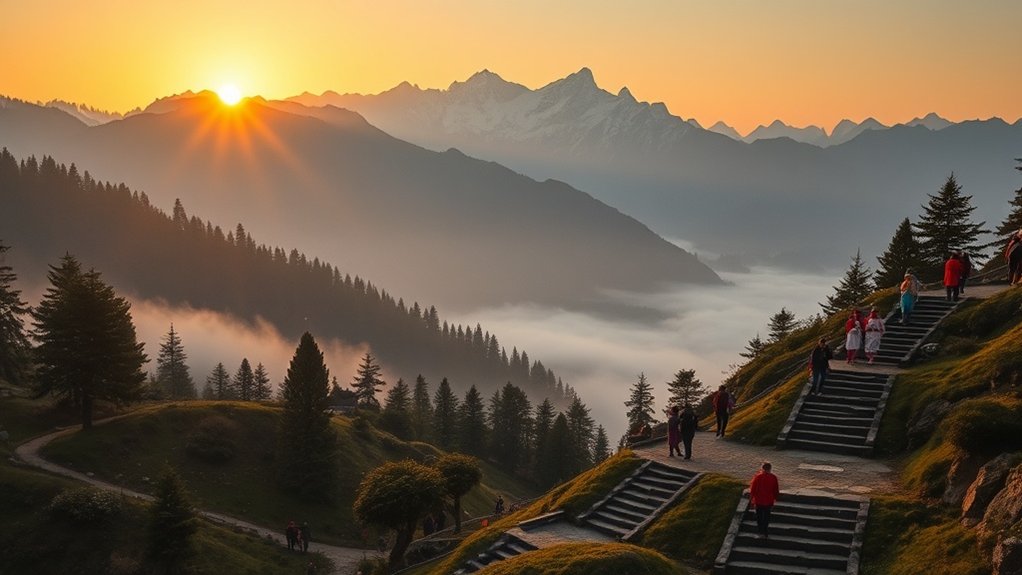
The Panch Kedar Circuit represents a unique pilgrimage route in the Indian Himalayas, linking five sacred Shiva temples. When you explore this circuit, you’ll find it encompasses Kedarnath, Tungnath, Rudranath, Madhyamaheshwar, and Kalpeshwar. Each temple holds a distinct geographical and spiritual significance, positioned at varying altitudes and landscapes. You’ll appreciate how the circuit integrates both physical challenge and religious devotion, requiring trekkers to navigate rugged terrain. Understanding the Panch Kedar means recognizing its role as a cohesive spiritual journey rather than isolated visits. The route reflects a deep cultural connection to Shiva worship, emphasizing penance and purification. As you engage with the Panch Kedar pilgrimage, you grasp the blend of natural beauty and sacred tradition shaping this revered path. Additionally, the experience of this pilgrimage can enhance emotional well-being, as it provides a profound opportunity for introspection and connection to spiritual heritage.
The Mythological Story Behind the Panch Kedar Temples
You’ll find that the mythological story behind the Panch Kedar temples centers on Shiva’s disguise to avoid the Pandavas after the Kurukshetra war. This legend explains how Shiva’s body parts appeared at five different locations, forming the Panch Kedar. Understanding this narrative helps clarify the spiritual and cultural significance of each temple in the circuit. Additionally, the temples serve as a cultural reflection of the region’s rich heritage, connecting the past with present spiritual practices.
Legend of Shiva’s Disguise
Although many know Shiva as the powerful deity of destruction and transformation, few are aware of the mythological story that explains his unique presence across the Panch Kedar temples. After the Kurukshetra war, Shiva sought to avoid the Pandavas, disguising himself as a bull to escape their pursuit. When the Pandavas recognized him, Shiva vanished, reappearing in five parts across different locations in the Garhwal Himalayas. Each temple in the Panch Kedar circuit corresponds to a specific part of Shiva’s bull form, symbolizing his fragmented presence. This legend contextualizes the temples’ scattered geography and spiritual significance, reflecting Shiva’s elusive nature and the profound relationship between divine manifestation and earthly pilgrimage sites. Understanding this story helps you appreciate the deeper symbolic meaning embedded within the Panch Kedar pilgrimage.
Formation of Panch Kedar
When you explore the formation of Panch Kedar, you uncover a deeply symbolic narrative that connects divine intervention with geographical and spiritual significance. According to mythology, Lord Shiva transformed into a bull to evade the Pandavas after the Kurukshetra war. When the Pandavas sought him for absolution, he disappeared into the earth, but his body parts surfaced at five distinct locations in the Garhwal Himalayas. These sites became the Panch Kedar temples—each representing a specific part: Kedarnath (hump), Tungnath (arms), Rudranath (face), Madhyamaheshwar (navel), and Kalpeshwar (hair). This dispersion symbolizes Shiva’s multifaceted presence and offers devotees varied spiritual experiences. By understanding this origin, you appreciate how the Panch Kedar circuit integrates myth, geography, and devotion into a cohesive pilgrimage reflecting Shiva’s enduring grace and protection.
The Role of Panch Kedar in Hindu Pilgrimage Culture
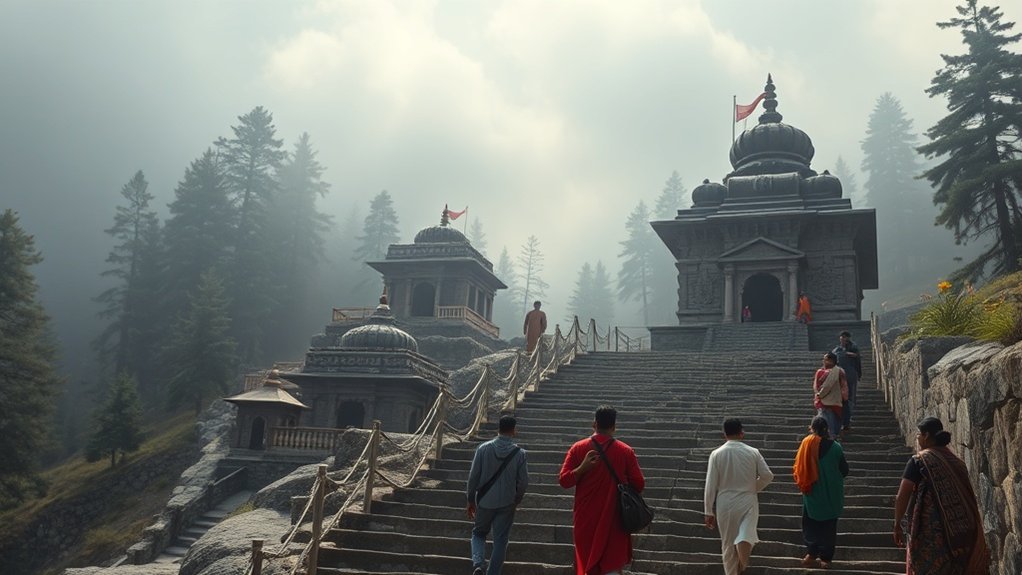
Since Hindu pilgrimage culture deeply values spiritual journeys, the Panch Kedar temples hold a unique place within this tradition. When you undertake this circuit, you engage with a layered practice of devotion, penance, and seeking divine blessings. The Panch Kedar pilgrimage integrates geography, mythology, and ritual, reinforcing communal identity and spiritual discipline. This circuit not only tests your physical endurance but also deepens your spiritual resolve. Additionally, the intricate symbolism in early Christian art parallels the rich spiritual narratives found in Hindu traditions.
| Aspect | Significance | Your Experience |
|---|---|---|
| Spiritual Discipline | Encourages introspection | You cultivate patience and focus |
| Mythological Roots | Ties to Lord Shiva’s legend | You connect with ancient tales |
| Community Bonding | Shared pilgrimage strengthens ties | You join collective devotion |
| Physical Challenge | High-altitude trekking | You test body and mind limits |
What Each Panch Kedar Temple Means Spiritually
Understanding the spiritual meaning of each Panch Kedar temple enriches your pilgrimage experience by revealing distinct aspects of Lord Shiva’s divine presence. At Kedarnath, you connect with Shiva’s powerful and protective form, symbolizing liberation from worldly bonds. Tungnath represents his serene and meditative aspect, encouraging inner peace and spiritual focus. Rudranath embodies Shiva’s fierce and transformative energy, guiding you through personal challenges and renewal. Madhyamaheshwar highlights Shiva’s role as a compassionate healer, offering solace and spiritual restoration. Finally, Kalpeshwar signifies Shiva’s omnipresence and accessibility, reminding you that divine grace is always within reach. Each temple consequently offers a unique spiritual dimension, allowing you to engage with Shiva’s multifaceted nature and deepen your understanding of his divine significance. Engaging in artistic practices can further enhance this spiritual journey by fostering mindfulness and emotional connection.
Unique Rituals and Practices at Panch Kedar Temples
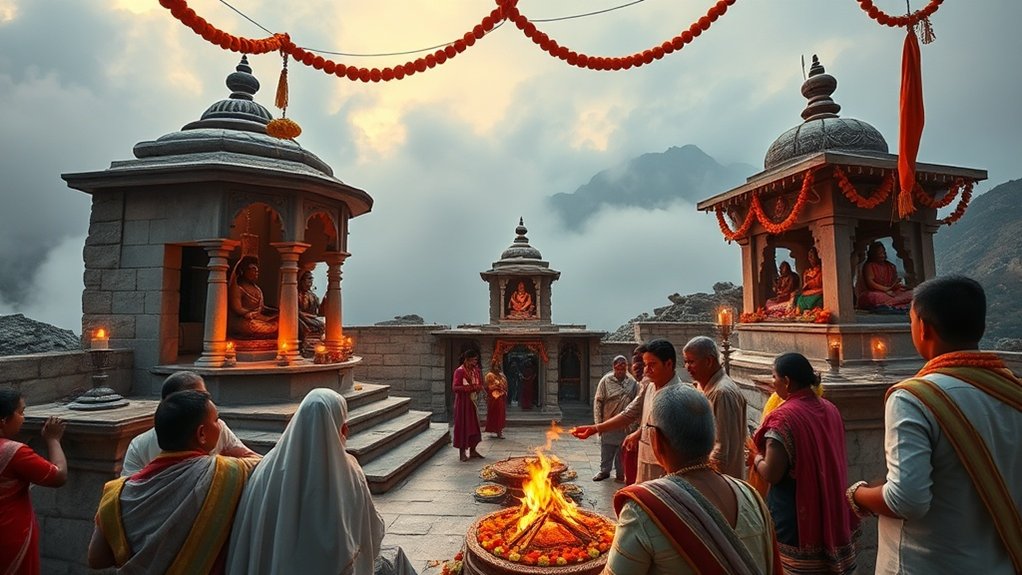
Although each Panch Kedar temple honors Lord Shiva, their unique rituals and practices reflect diverse regional traditions and spiritual emphases. When you visit Kedarnath, you’ll notice the emphasis on austerity, with priests performing rituals in simple attire, symbolizing renunciation. At Tungnath, rituals incorporate local Himalayan customs, blending Shiva worship with nature reverence. Rudranath’s ceremonies often involve fire offerings, highlighting purification themes. Madhyamaheshwar focuses on intricate daily worship rituals, emphasizing Shiva’s role as the cosmic center. Finally, Kalpeshwar’s practices integrate folk traditions, making the worship accessible and community-centered. By observing these variations, you understand how each temple connects Shiva’s universal essence to local cultural expressions, enriching your spiritual journey through the Panch Kedar circuit. Additionally, the use of symbolic rituals in these practices serves to deepen the spiritual connection between devotees and the divine.
Traditional Visiting Order of Panch Kedar Temples
The distinct rituals at each Panch Kedar temple reflect a deep connection between Shiva’s universal presence and local tradition, setting the stage for the journey through the circuit. Traditionally, you start at Kedarnath, where Shiva’s hump is believed to have appeared. From there, you proceed to Tungnath, associated with his arms. Next, you visit Rudranath, linked to his face, followed by Madhyamaheshwar, representing his navel. The circuit concludes at Kalpeshwar, where Shiva’s hair is worshipped. This sequence isn’t arbitrary; it mirrors mythological narratives and offers a structured spiritual progression. By adhering to this order, you engage with the layered symbolism embedded in each shrine, enhancing your pilgrimage’s coherence and depth. This systematic path also respects local customs that have evolved over centuries, maintaining the circuit’s integrity. Additionally, the experience of these temples can be enriched by the textural elements that evoke profound emotional responses, inviting deeper reflection during your visit.
Nature and Divinity in the Panch Kedar Pilgrimage Experience
As you journey through the Panch Kedar Circuit, you’ll notice how the surrounding landscapes create a serene environment that enhances spiritual reflection. The natural setting isn’t just a backdrop; it embodies a divine presence that many pilgrims recognize as integral to their experience. Understanding this connection helps clarify why nature plays an essential role in the pilgrimage’s spiritual significance. Engaging with the transformative experiences offered by nature can deepen one’s spiritual journey, fostering a connection between the self and the divine.
Sacred Landscapes and Serenity
When you journey through the Panch Kedar circuit, you encounter landscapes that do more than please the eye—they embody a profound spiritual essence. These sacred terrains, ranging from rugged mountain passes to tranquil river valleys, create an environment that naturally induces serenity and introspection. The physical remoteness and untouched nature of these regions minimize worldly distractions, allowing your mind to focus deeply on the pilgrimage’s spiritual objectives. The interplay of altitude, climate, and natural formations shapes a setting where contemplation becomes almost inevitable. This serene backdrop not only supports personal reflection but also reinforces the pilgrimage’s purpose of reconnecting with inner divinity through external stillness. Consequently, the landscape’s sacredness lies in its ability to foster a meditative state essential for the transformative experience the Panch Kedar circuit offers.
Divine Presence in Nature
Experiencing the Panch Kedar pilgrimage immerses you in a profound synthesis of nature and divinity, where every element of the landscape reflects sacred presence. As you traverse rugged mountains, dense forests, and pristine rivers, you witness how natural features are not merely backdrops but integral to spiritual experience. The environment’s tranquility enhances your connection to the divine, reinforcing ancient beliefs that deities manifest through nature’s forms. This pilgrimage contextualizes spirituality within ecological settings, emphasizing harmony between human devotion and natural surroundings. You recognize that the divine presence in Panch Kedar isn’t confined to temples but extends to the living landscape itself, inviting reflection on how nature and spirituality interdepend. This understanding deepens your appreciation of the pilgrimage as a holistic encounter with both the sacred and the natural world.
Tips for Planning a Spiritual Journey on the Panch Kedar Circuit
Although the Panch Kedar circuit offers profound spiritual rewards, careful planning is essential to navigate its challenging terrain and remote locations effectively. First, consider the best season—May to October—when weather conditions are favorable. Prepare physically by engaging in endurance training, as trekking involves steep ascents and high altitudes. Pack minimally but include essentials like sturdy footwear, layered clothing, and first-aid supplies. Acclimatize properly to avoid altitude sickness. Secure permits and local guides in advance to guarantee smooth access and enhance your understanding of the sites. Allocate sufficient time for each temple visit to reflect and absorb the spiritual ambiance. Finally, respect local customs and environmental guidelines to preserve the sanctity and natural beauty of the circuit throughout your journey. Additionally, consider creating a comfortable seating area to rest and reflect on your experiences during the trek.
Spiritual Benefits of Worshiping at Panch Kedar
When you worship at Panch Kedar, you tap into a source of healing and inner peace that many seekers have experienced over centuries. This sacred circuit encourages reflection and detachment, fostering spiritual growth and a sense of liberation. Understanding these benefits helps you appreciate why the pilgrimage holds deep significance beyond its physical challenges. Additionally, engaging in mindfulness and reflection during your journey can deepen your spiritual experience and enhance your connection to the divine.
Healing and Inner Peace
Because the Panch Kedar temples are nestled in serene and remote Himalayan settings, they offer more than just physical pilgrimage—they provide a profound opportunity for healing and inner peace. When you visit these sacred sites, the natural tranquility and spiritual ambiance encourage mental calmness and emotional balance. The physical challenge of the trek combined with the meditative environment helps reduce stress and fosters mindfulness. Engaging in worship amidst such isolation allows you to detach from daily distractions, facilitating introspection and emotional release. The consistent rhythm of rituals and chants supports a meditative state, enhancing psychological well-being. Consequently, the Panch Kedar circuit functions not only as a religious journey but also as a therapeutic process, enabling you to restore inner harmony and gain clarity amidst life’s complexities.
Liberation and Spiritual Growth
Beyond promoting healing and inner peace, the Panch Kedar temples serve as powerful catalysts for liberation and spiritual growth. When you visit these sacred sites, you engage in a transformative journey that encourages detachment from worldly attachments and ego. The unique mythology and rituals at each temple symbolize stages of self-realization, guiding you toward Moksha—the ultimate release from the cycle of birth and death. By participating in the pilgrimage, you confront your inner limitations and cultivate virtues like humility and devotion. This process fosters heightened spiritual awareness and deepens your connection with the divine. Consequently, the Panch Kedar circuit doesn’t just offer temporary solace; it actively supports your evolution toward spiritual liberation and enduring growth.
Inner Transformation Through Panch Kedar Devotion
Although the physical journey to the Panch Kedar temples demands endurance, the devotion you cultivate throughout this pilgrimage fosters profound inner transformation. Engaging deeply with each temple’s unique aspect of Lord Shiva encourages self-reflection, humility, and surrender. This devotion acts as a catalyst, prompting you to confront personal limitations and attachments. The repeated rituals and meditative practices facilitate heightened awareness and mental clarity. Contextually, the pilgrimage’s challenging terrain mirrors inner obstacles, making your spiritual progress tangible. Objectively, such sustained commitment reshapes your mindset, promoting resilience and equanimity. By aligning your intentions with the symbolic significance of each shrine, you undergo a subtle but impactful shift in consciousness. Ultimately, your dedication to the Panch Kedar circuit cultivates a transformative journey beyond the physical, fostering lasting spiritual growth.
Frequently Asked Questions
What Is the Best Time of Year for the Panch Kedar Pilgrimage?
The best time for the Panch Kedar pilgrimage is like a clear sky after the storm, from May to October. You’ll avoid heavy snowfall and enjoy accessible trails, ensuring a safer and more fulfilling journey.
Are There Any Accommodations Near Each Panch Kedar Temple?
Yes, you’ll find basic accommodations near each Panch Kedar temple, though options vary in comfort. It’s wise to book in advance during peak seasons, as facilities can be limited and rustic due to the remote Himalayan locations.
Can Non-Hindus Participate in the Panch Kedar Pilgrimage?
About 30% of pilgrims are non-Hindus, showing inclusivity. You can participate respectfully, as the pilgrimage focuses on devotion and nature. Just be mindful of customs and local practices to guarantee a meaningful experience.
What Physical Fitness Level Is Required for the Trek?
You’ll need moderate to good physical fitness for the Panch Kedar trek, as it involves steep ascents, uneven terrain, and high altitudes. Preparing with cardio, strength training, and acclimatization will help you manage the challenges effectively.
Are There Any Local Guides Available for the Circuit?
Yes, you’ll find local guides available throughout the Panch Kedar Circuit. They possess detailed knowledge of the terrain and cultural significance, helping you navigate safely while enriching your experience with contextual insights and practical support.