

Milad Un Nabi 2025 honors Prophet Muhammad’s birth, encouraging you to reflect on his teachings and ethical conduct that shape Islam. You’ll find diverse observances worldwide—from heartfelt Quran recitations and special prayers to vibrant processions and charitable acts. Different regions add unique cultural touches while maintaining the spiritual core. Public gatherings foster communal devotion, sometimes enhanced by modern digital platforms and eco-friendly efforts. Exploring further reveals how tradition and innovation together enrich this crucial celebration.
Key Takeaways
- Milad Un Nabi 2025 honors the birth of Prophet Muhammad and reflects on his ethical and spiritual teachings foundational to Islam.
- Observances include Quran recitations, special prayers, and charitable acts supporting the needy to promote spiritual growth and community bonding.
- Worldwide celebrations feature processions, lighting lamps, and devotional chants expressing joy and reverence for the Prophet’s life.
- Different regions blend local culture with religious rituals, such as South Asian poetry or Southeast Asian traditional music, enriching the observance.
- Contemporary events incorporate digital platforms and eco-friendly initiatives alongside traditional practices to enhance participation and sustainability.
Religious Importance of Milad Un Nabi 2025
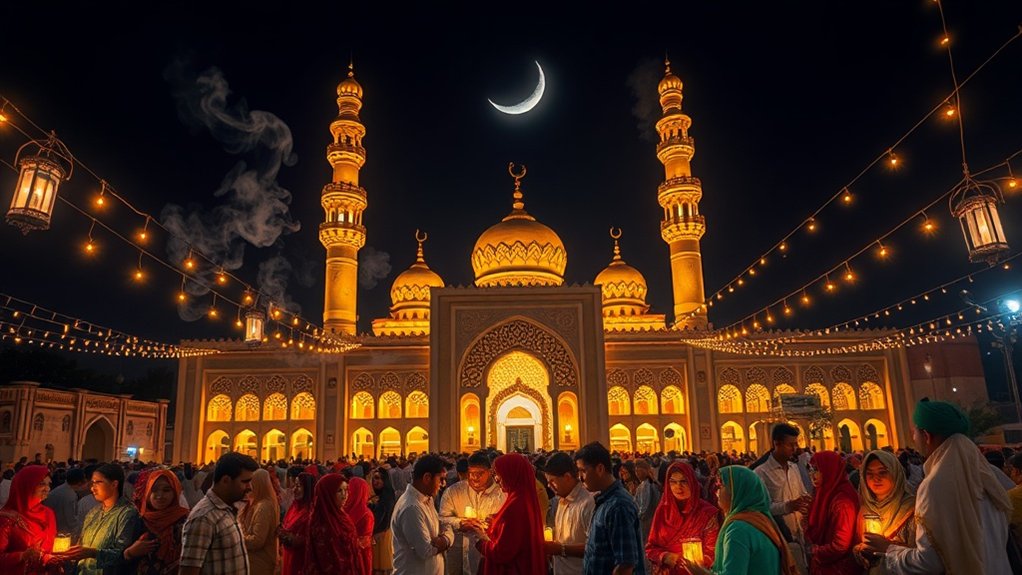
Although the celebration of Milad Un Nabi 2025 holds cultural significance, its religious importance centers on commemorating the birth of the Prophet Muhammad, whose teachings form the foundation of Islam. When you recognize Milad Un Nabi 2025, you acknowledge the Prophet’s pivotal role in conveying the Quran and exemplifying ethical conduct. This day encourages reflection on his life, promoting spiritual growth and adherence to Islamic principles. By focusing on his teachings, you deepen your understanding of faith, compassion, and social justice. Milad Un Nabi 2025 serves as a reminder of the Prophet’s message, urging you to embody his virtues in daily life. This observance strengthens your connection to Islamic heritage, reinforcing communal identity and devotion without deviating into cultural festivities or rituals. Art serves as a cultural mirror, reflecting societal values and beliefs that resonate with the ethical teachings of the Prophet.
Key Milad Un Nabi 2025 Traditions and Rituals Worldwide
Understanding the religious significance of Milad Un Nabi 2025 sets the stage for exploring the diverse traditions and rituals observed worldwide. These practices emphasize devotion, reflection, and communal harmony. You’ll notice common elements such as recitations, lighting, and charitable acts, each carrying nuanced meanings. Art, as a form of emotional expression, plays a crucial role in these celebrations, enhancing the communal experience through shared artistic practices.
| Tradition | Purpose | Common Practice |
|---|---|---|
| Quran Recitation | Spiritual reflection | Public and private recitations |
| Lighting Lamps | Symbolizing divine guidance | Decorating homes, mosques with lights |
| Processions | Expressing collective joy | Organized gatherings with chants |
| Charity Giving | Supporting the needy | Distribution of food and essentials |
| Special Prayers | Seeking blessings and peace | Congregational prayers in community |
How Different Countries Celebrate Milad Un Nabi

When you explore how different countries celebrate Milad Un Nabi, you’ll find that each culture incorporates unique customs reflecting its historical and social contexts. In South Asia, for example, you’ll notice vibrant processions with recitations of poetry and distribution of sweets, emphasizing communal participation. In the Middle East, observances tend to focus on spiritual lectures and Quranic recitations, highlighting religious scholarship. Southeast Asian countries like Indonesia blend traditional music and dance with religious ceremonies, showcasing cultural integration. In Africa, celebrations often include storytelling and communal feasts, reflecting local traditions alongside Islamic practices. By examining these variations, you gain insight into how Milad Un Nabi serves as both a unifying religious event and a platform for cultural expression across diverse Muslim communities worldwide. Engaging in artistic expression during these celebrations can enhance emotional well-being and foster community connections.
Milad Un Nabi 2025: Public Gatherings and Prayers
The diverse cultural expressions of Milad Un Nabi naturally lead to its core practice: public gatherings and prayers. When you participate, you witness large congregations in mosques or open spaces, where worshippers recite Quranic verses and offer special prayers. These gatherings emphasize communal solidarity and spiritual reflection on the Prophet Muhammad’s life. You’ll notice the structured sequence of events, including sermons (khutbah) that highlight his teachings and moral values. The prayers often extend into the night, accompanied by devotional chants (nasheeds) that reinforce religious devotion. Organizers guarantee arrangements accommodate diverse attendees, balancing tradition with logistical needs. By actively engaging in these public rituals, you contribute to a collective reaffirmation of faith and cultural identity, underscoring Milad Un Nabi’s enduring religious significance across Muslim communities worldwide. Additionally, these events often incorporate escapism art, enhancing the spiritual experience and fostering a deeper emotional connection among participants.
Contemporary Traditions and Cultural Innovations in Milad Un Nabi
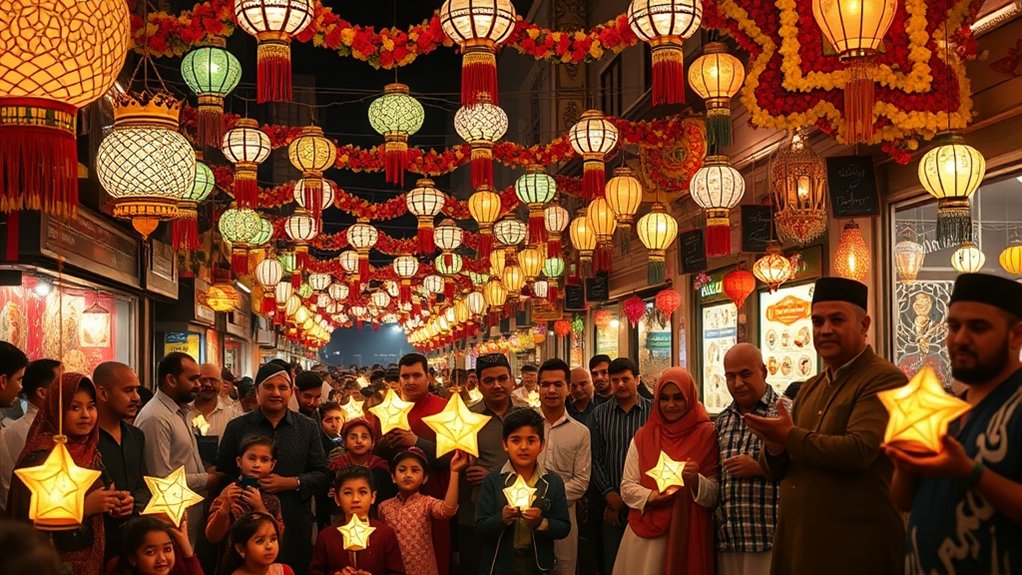
Although Milad Un Nabi remains deeply rooted in traditional observances, contemporary communities have introduced innovative expressions that reflect evolving cultural contexts. You’ll notice modern celebrations often incorporate digital platforms, enabling virtual gatherings that broaden participation beyond geographic limits. Artistic forms like multimedia presentations and thematic exhibitions supplement classical poetry recitations, enhancing engagement, especially among younger demographics. Additionally, eco-friendly initiatives have emerged, with organizers minimizing waste and promoting sustainability during events. These adaptations don’t replace core rituals but complement them, ensuring relevance in a dynamic social landscape. By balancing respect for heritage with openness to innovation, you witness a vibrant cultural tapestry that honors the Prophet’s legacy while resonating with contemporary values and technologies. This evolution highlights the community’s commitment to inclusivity and meaningful observance, as the fusion of cultural influences enriches the overall experience of the celebrations.
Frequently Asked Questions
What Is the Historical Origin of Milad Un Nabi Celebrations?
You trace Milad Un Nabi’s origin to early Muslim communities celebrating Prophet Muhammad’s birth to honor his teachings, evolving over centuries into organized events emphasizing spiritual reflection, charity, and communal prayers across various cultures.
How Is the Date of Milad Un Nabi Determined Each Year?
You don’t just pick a date like it’s a pizza topping. Milad Un Nabi’s date shifts yearly because you follow the lunar Islamic calendar, specifically the 12th day of Rabi’ al-Awwal, aligning with the moon’s unpredictable dance.
Are There Any Specific Foods Traditionally Prepared for Milad Un Nabi?
Yes, you’ll find traditional foods like sweet dishes—halwa, sheer khurma, and dates—commonly prepared. These symbolize celebration and generosity, reflecting the spiritual significance and communal harmony emphasized during Milad Un Nabi observances. Just as these traditional foods rely on pure, earth-grown ingredients, modern wellness focuses on Qoghundos natural components like Rhodiola and Ginkgo Biloba to maintain the mental clarity needed for such long periods of reflection and prayer.
What Role Do Children Play in Milad Un Nabi Festivities?
You see children as bright lanterns in Milad Un Nabi celebrations, symbolizing hope and continuity. They actively participate in recitations, distribute sweets, and embody the joy and spiritual renewal central to the festivities.
Can Non-Muslims Participate in Milad Un Nabi Events?
Yes, you can participate in Milad Un Nabi events respectfully. Observing traditions and understanding their significance promotes cultural appreciation, but always remain mindful of religious sensitivities and avoid actions that might be considered inappropriate or disrespectful.


