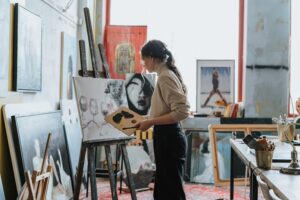
Every artist wants their work to feel personal and recognizable. A strong creative voice helps artwork stand apart, whether it appears in painting, photography, illustration, sculpture, or digital media. While technical skill is important, authenticity is often what makes art memorable.
Developing an authentic creative voice takes time. It grows through observation, experimentation, personal experience, and consistent practice. Many artists spend years refining not only how they create art, but also why they create it.
Authenticity does not mean trying to be unique in every way. It means creating work that honestly reflects personal ideas, emotions, interests, and artistic perspective.
Understand What Inspires You
Creative voice often starts with noticing what consistently draws your attention.
Some artists feel pulled toward crowded city streets filled with movement and noise. Others become fascinated by silence, empty rooms, faded photographs, or changing weather. These recurring interests usually reveal something important about artistic identity.
Inspiration can come from almost anywhere:
- Nature and landscapes
- Architecture and urban spaces
- Memory and emotion
- Cultural history
- Fashion and design
- Music and movement
- Everyday life
Sometimes inspiration arrives unexpectedly. A cracked wall texture. A conversation overheard at a café. The way evening light hits apartment windows after rain. These details quietly shape artistic perspective.
Keeping sketchbooks or visual journals helps reveal patterns over time. Looking through old work often exposes repeated themes, color choices, emotional tones, or compositional habits. Those repeated decisions gradually become part of an artist’s identity.
Oddly enough, many artists spend years searching for a style while already leaving clues everywhere in their work.
Focus On Personal Interpretation
Two artists can work from the same reference and produce pieces that feel entirely different.
That is where voice starts to separate itself from imitation. Personal interpretation is not about having the rarest subject. It is about seeing the subject through your own emotional filter. One painter may focus on warmth and softness in a portrait. Another may use the same face to create distance or tension. One photographer may find comfort in natural light. Another may use shadow to suggest uncertainty.
The subject matters less than the way it is handled.
This is one reason copying popular styles too closely can leave work feeling empty. A trend may look polished, but it does not carry your experience. Your reactions, your habits, and your private sense of meaning are what give work a distinct voice.
Ask yourself what you notice first. What do you leave out? What do you keep returning to? These choices often say more than technique alone ever could.
Experiment With Different Techniques
Experimentation is an important part of artistic development. Trying new materials, styles, and creative methods can help artists discover what feels most natural to them.
Some artists develop their voice through:
- Mixed media
- Layered textures
- Monochromatic palettes
- Abstract composition
- Minimalism
- Expressive brushwork
- Digital collage
- Unconventional materials
Not every experiment needs to become part of your final style. Some ideas will fall flat. That is fine. A few may feel awkward in the moment and later become central to how you work. Often, the things that seem strange at first are the ones that lead somewhere useful.
Develop Consistent Creative Habits
Consistency helps artists better understand their own creative instincts.
Creating regularly allows patterns to emerge naturally over time. Artists may notice recurring visual themes, emotional moods, or compositional choices appearing throughout multiple pieces.
Daily sketching, photography practice, painting studies, or visual journaling can strengthen artistic confidence and creative clarity.
Creative voice usually develops gradually rather than through a single breakthrough moment.
Avoid Chasing Every Trend
Modern artists absorb an overwhelming amount of visual content daily. Trends spread rapidly through social platforms, design communities, and creative industries. While trends can inspire, constantly chasing them often weakens artistic individuality.
Popular aesthetics rarely last long.
Artists who continuously shift styles to match current trends sometimes struggle to create work that feels emotionally grounded. The work may look technically impressive while still lacking personality.
Authenticity usually grows from sustained curiosity about subjects that genuinely matter to the artist.
That does not mean artists should isolate themselves from contemporary work. Influence is healthy. Exposure matters too. The important part is filtering inspiration through personal perspective instead of copying surface level aesthetics.
Some of the most recognizable artists developed their voice by returning repeatedly to themes they genuinely cared about, even when those subjects were not fashionable at the time.
Viewers tend to notice sincerity.
Learn To Accept Imperfection
Many artists feel pressure to create flawless work, especially when sharing art publicly online. However, authenticity often appears through imperfections, experimentation, and emotional honesty.
Visible brush textures, unfinished edges, spontaneous mark-making, or unusual composition choices can sometimes make artwork feel more alive and human.
Trying to remove every imperfection may also remove personality from the work itself.
Creative growth becomes easier when artists allow themselves to create work that feels honest instead of technically perfect.
Study Art With Intention
Looking at artwork carefully can help artists better understand their own preferences and creative direction.
Instead of only asking whether a piece looks impressive, artists can ask:
- Why does this artwork feel emotionally powerful?
- How does composition affect the mood?
- What role do color and texture play?
- Why does this artist’s style feel recognizable?
Studying art this way encourages deeper creative awareness.
Museums, galleries, independent artists, photography collections, and historical works can all provide valuable insight into artistic identity and visual storytelling.
Write About Your Creative Process
Writing can help artists clarify ideas behind their work.
Simple reflections about:
- Inspiration
- Materials
- Emotions
- Symbolism
- Creative challenges
- Artistic goals
Some artists also review written content with tools like an AI text detector while editing artist statements or portfolio descriptions to ensure the language still feels natural and personal. These tools are only part of the editing process, while the final voice should always reflect the artist’s own perspective.
Allow Creative Voice To Evolve
A creative voice is not fixed.
That matters more than people often admit. Early work may look very different from later work, and that change is not a problem. It is a sign that you are paying attention to your own growth.
Some artists worry that changing style will confuse people. Maybe it will, for a while. Yet forcing yourself to stay the same can be more damaging. Real artistic identity is flexible. It shifts as your experiences shift. It grows as your understanding deepens.
The point is not to lock yourself into one look forever. The point is to keep making work that feels true to where you are now.
Build a Work Around Meaning
Art often becomes more powerful when it connects to ideas that genuinely matter to the creator.
Meaning can come from:
- Memory
- Identity
- Relationships
- Environment
- Emotion
- Culture
- Social observation
- Imagination
Conclusion
Developing an authentic creative voice takes patience, experimentation, and self-awareness. While technique and influence are important parts of artistic growth, meaningful work usually comes from personal interpretation and honest creative exploration.
Artists strengthen their voice by studying inspiration, experimenting with materials and ideas, practicing consistently, and allowing their work to evolve naturally over time.
Authentic art does not need to follow every trend or seek perfection in every detail. The strongest creative voices often emerge when artists create work that genuinely reflects their own perspective, curiosity, and emotional experience.